What happens when a bottle cap opens too easily during transport? Why do some closures feel tight in the plant but loosen by the time they reach the shelf?
These small moments decide how safe and steady a bottled product stays. A digital torque tester helps teams spot these weak points before the batch moves out. It brings clarity to how tight or loose a cap should be, so bottles stay safe through storage, travel, and daily use.
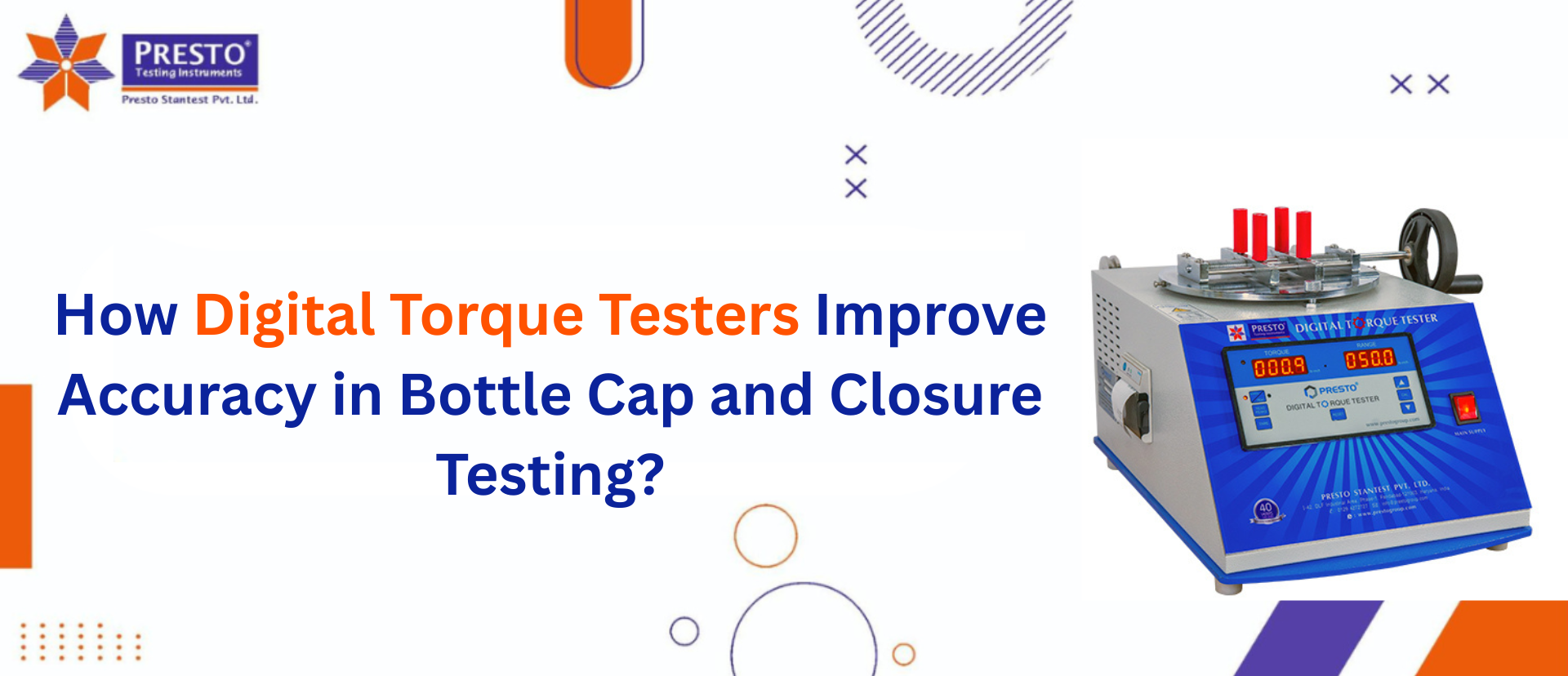
A Torque tester for caps measures the opening and closing force on bottle closures. It shows how much twist strength the cap holds before it moves. This matters for water bottles, juice bottles, edible oils, medicines, syrups, disinfectants, and cosmetic containers. Even a small shift in torque can change user experience, leakage risk, product safety, and tamper clarity.
The tester removes guesswork. It shows the exact value needed to twist the cap. This helps teams decide if the seal is too loose, too tight, or just right for travel and handling.
A Torque tester for Bottles carries a strong gripping setup that holds the bottle body in place. The upper jaw holds the cap. When the user twists the cap, the machine reads the torque value. The readings stay smooth and steady. It shows peak torque, opening torque, closing torque, and slipping patterns. These patterns help teams understand how the closure behaves during real use.
The equipment handles bottles of different shapes and sizes. From soft PET bottles to rigid HDPE containers, it picks up subtle signs of seal weakness. This helps users pick the right capping pressure on production lines.
Small changes in tightening pressure on production lines lead to big issues later. A loose cap leaks. A tight cap cracks. A cap with uneven pressure warps. Digital torque testing helps teams see these early.
A steady bottle matters in food, beverages, pharma, personal care, and chemicals. These products face stacking, shaking, squeezing, and temperature changes. A cap torque tester mirrors all these stresses in a simple twist test. It highlights early signs of slipping, stripping, or deformation in the cap thread.
Digital readings show even tiny variations in torque. This matters when caps come from different batches, machines, or suppliers. It also helps when bottle threads vary slightly. The digital unit reads every small shift in closure strength. This helps plants maintain steady performance for every batch.
Caps and closures face daily stress. Bottles get squeezed on the shelf. They fall during handling. They sit in warm rooms. They stay in cold trucks. At every stage, the closure must hold its position without leaking or loosening.
A bottle torque tester shows how much twist the cap can take before slipping. It shows how the closure sits on the thread. It highlights friction changes caused by temperature or handling. This allows teams to set the correct tightening force during filling. It also reduces customer complaints linked to leakage, loose caps, or broken threads.
Packingtest stands beside teams that work with bottles every day. The support stays simple. The team helps users choose the right model, the right grip, and the right torque range based on the bottle design. They explain small things that matter, such as bottle flexibility, cap thread strength, and handling forces. First-time users get clear guidance. Regular users get steady help. This makes torque testing calm and easy for every plant.
Conclusion
A digital torque test brings quiet clarity to bottle safety. It helps teams see early signs of unstable caps and weak threads. It protects bottles during travel and storage. It also gives brands confidence that every closure feels right when opened by the user.
If you are a manufacturer from South Africa, Namibia, Botswana, Zambia, Zimbabwe, or Mozambique, you can visit our page or contact us for guidance suited to your bottle testing needs.
Our latest product catalogue cum company profile is now
available to download. Where should we send your FREE copy?